
.svg)
Frequently asked questions
Pathways to medical school
What are the pathways to medicine in Australia?
Postgraduate Medicine (~ 4 years)
This pathway is open to students who have completed an undergraduate degree. Applicants are assessed based on GPA, performance in the GAMSAT, and interview performance. Applications are primarily submitted through GEMSAS, with some universities requiring direct applications.
Provisional Entry for Postgraduate Medicine (~ 6-8 years)
This pathway is available to high-achieving school leavers and offers a guaranteed or conditional pathway into postgraduate medicine without requiring the GAMSAT. Students complete an undergraduate degree before progressing to a Doctor of Medicine (MD), subject to maintaining academic requirements. Entry is highly competitive and typically requires a very high ATAR, a strong UCAT score, and interview performance.
What are the admission requirements for medicine in Australia?
Early preparation begins with subject selection, as both subject choice and academic performance contribute to medical school eligibility. Admission is highly competitive, and applicants typically require an ATAR of 98–99+ for most undergraduate programs..
University Clinical Aptitude Test (UCAT)
The UCAT is a two-hour computer-based exam used for undergraduate medicine admissions. It assesses cognitive abilities including critical thinking, problem-solving, and non-verbal reasoning. The subtests include Verbal Reasoning, Decision Making, Quantitative Reasoning, Abstract Reasoning, and Situational Judgement.
Multiple Mini Interview (MMI)
The MMI is typically the final stage of the selection process. Candidates rotate through a series of stations (commonly 6–10 stations), spending around 1–2 minutes reading and 6–8 minutes responding at each station. The MMI assesses communication, ethical reasoning, and interpersonal skills.
What are the pathways to medicine in New Zealand?
For medical school entrance in New Zealand, not as much weighting is placed on high school grades, as students are required to complete one year of a pre medicine degree before applying to medical school.
Biomedical science is science heavy with a competitive atmosphere. It’s historically the most common entry pathway to medical school. Health science is public health focused with lots of essays and assignments. The content is interesting for those interested in more than just the science side of healthcare.
The University of Auckland offer both Biomedical Science and Health Science where as The University of Otago only offers Health Science.
What are the admission requirements for medicine in New Zealand?
In New Zealand, to begin your journey to medical school you must complete a first year of pre-med at either The University of Auckland or The University of Otago, with a competitive GPA (average A overall). Your core papers are chosen for you and consist of a range of Health and Biological Sciences. Subjects such as Biology, Chemistry, Physics, are recommended high school subjects, but students should choose subjects that they are passionate about.
University Clinical Aptitude Test (UCAT)
The UCAT is a two-hour computer-based exam used for undergraduate medicine admissions. It assesses cognitive abilities including critical thinking, problem-solving, and non-verbal reasoning. The subtests include Verbal Reasoning, Decision Making, Quantitative Reasoning, Abstract Reasoning, and Situational Judgement.
Multiple Mini Interview (MMI)
The MMI is typically the final stage of the selection process. Candidates rotate through a series of stations (commonly 6–10 stations), spending around 1–2 minutes reading and 6–8 minutes responding at each station. The MMI assesses communication, ethical reasoning, and interpersonal skills.
What are the pathways to medicine in the UK?
Undergraduate Medicine (~5–6 years)
This pathway is open to school-leavers and involves direct entry into a medical degree, typically leading to a Bachelor of Medicine and Bachelor of Surgery (MBBS/MBChB).Entry is highly competitive and usually requires strong academic results, performance in admissions tests such as the UCAT (and in some cases the BMAT), and interview performance.
Postgraduate Medicine (~4 years)
This pathway is open to students who have completed an undergraduate degree. Graduate-entry medicine programs are typically 4 years in duration, rather than longer than undergraduate courses.
Applicants are assessed based on academic performance (degree/GPA), admissions tests such as the UCAT or GAMSAT, and interview performance.
Applications are submitted through UCAS, rather than Australian systems.
What are the admission requirements for medicine in the UK?
Early preparation begins with subject selection, as both subject choice and academic performance are critical for admission. UK medical schools typically require AAA–A*AA at A-level (or equivalent), often including Chemistry and sometimes Biology. Entry is highly competitive, with top applicants achieving A*AA or higher.
UCAT
The UCAT is a two-hour computer-based admissions test used by most UK medical schools. It assesses cognitive abilities such as critical thinking, problem-solving, and non-verbal reasoning. The subtests include Verbal Reasoning, Decision Making, Quantitative Reasoning, Abstract Reasoning, and Situational Judgement.
Interview
The interview is typically the final stage of the selection process. Many universities use the Multiple Mini Interview (MMI), where candidates rotate through a series of stations (commonly 6–10 stations), with around 1–2 minutes reading and 5–8 minutes responding at each station. Some universities may use panel-style interviews instead.
UCAS Application
Applications are submitted through UCAS and include academic results, a personal statement, and a reference. Students can apply to up to four medical schools (with a fifth non-medical choice optional), making strategic selection important.
Grades
What subjects should I be taking for Australia?
- Chemistry
- English
- Mathematics (Methods) - Not General Mathematics
While subjects such as Biology and Physics, may scale well in a student’s application to medical school, it is not required, so we advise that students choose subjects that they are passionate about.
What subjects should I be taking for UK Med?
Prerequisites
+A-Level Chemistry
Highly recommended:
+At least one A-Level in Biology (or Human Biology), Mathematics or Physics
Do I need to do well in high school for NZ Med?
Biomedical Science (First Year Entry)
Indicative minimum rank scores for consideration:
NCEA: ~280 (e.g. ~40 Excellence + 40 Merit credits)
CIE: ~310 (ABB)
IB Diploma Programme: ~33
Health Science (First Year Entry)
Indicative minimum rank scores for consideration:
NCEA: ~250 (e.g. mix of Excellence and Merit credits)
CIE: ~300 (BBB)
IB Diploma Programme: ~33
Note: The lowest score to be considered. Students should be aiming for as high as possible to guarantee acceptance.
Tips for your final year of high school
Teachers respond very well to students who are genuinely interested in their subjects. This applies especially to those where the content being studied is subjective and where said teachers can get to know how you write or what kind of ideas you like to express in your written work. Such examples include humanities subjects like history, economics, psychology or business, and of course English. While it is true that a lot of the assessment for secondary school curriculums in these subjects is marked externally, teachers are not only more willing to invest time in keen students, making their work incrementally better throughout high school, but they are also more likely to pick up on the smaller consistent errors that students make in the way they structure arguments or the flow of ideas. Overall, overtly expressing interest in subjective subjects increases your chances of receiving feedback that will yield you better results in your final exams.
Set Goals, Not Time Limits
Among the most common questions that high school students ask is: “How many hours should I be studying per night?”. The answer to this question is: You are asking the wrong question. Designing a study schedule with a specific amount of time allotted to each subject per night is ironically a time-waster. This is because it is impossible to ascertain how long one will need in order to learn new content. Reaction kinetics in chemistry might be easy for you, but photosynthesis in biology, not so much. A proper understanding of the latter might require you to spend a disproportionate amount of time on YouTube looking at videos to help it make sense. It is for this reason that goals that are not time-based should be set by students.
Furthermore, past-papers and practice exams at the back of textbooks make for excellent study resources once students have learned their content to a sufficient extent. In this way, students can set goals like “1 past paper per night every night this week”. This not only helps to solidify knowledge and assess how well one can apply it under simulated exam conditions, but it gets students out of the habit of formulating time-based goals.
Schedule in Time Off
Perhaps the most important point, and there’s not much more to it than this. Make time to go to that party, enjoy spending the day with your family, watch Netflix, or get Ubereats. You don’t have to go at 100km per hour every day of the year.
Be Patient
Perhaps the most important piece of advice. You are going to face an uphill battle with the balancing act that takes over your life in this period, so approach this time with the knowledge that good grades take training, and learning how to organise your priorities takes experience. Each of these takes time. Keep your head up and stay the course! You have what it takes to achieve your goals.
What is the ATAR?
Not all students receive an ATAR — it is only calculated for those who are eligible and choose to have one generated for tertiary admission. The ATAR reflects a scaled comparison of a student’s performance against other students in the same year.
Students completing alternative or international curricula, such as the International Baccalaureate (IB) Diploma Programme or Cambridge International Examinations (CIE), have their results converted into an ATAR-equivalent to allow for comparison across applicants.
There is no single minimum ATAR required for entry into medicine. As a general guide, an ATAR of 99+ is typically competitive for undergraduate medicine, although requirements vary by university and pathway. Some universities place greater emphasis on other components such as the UCAT, interviews, or additional selection criteria, meaning that a lower ATAR may still be considered in certain contexts.
Why do we have an ATAR?
Each of these curriculums uses its own assessment structure and scoring system. To enable fair comparison across all students, results are standardised and used to calculate an ATAR, which ranks students relative to their cohort.
How is the ATAR calculated?
These subject results are then scaled and standardised to account for differences in subject difficulty and cohort performance. Your best subjects are combined to form an overall aggregate score, which is used to determine your ATAR.
The ATAR is not a mark, but a percentile ranking that compares your performance against other students in your cohort. This means your final ATAR depends not only on your scores, but also on how you perform relative to others.
Different curricula — such as the IB Diploma Programme or SACE — use their own scoring systems, but these are converted into a comparable ranking for ATAR calculation.Some systems may also apply subject bonuses or adjustments, depending on the state and subjects studied.
What are the ATAR requirements and cut-offs for medicine?
When you apply to an Australian medical school, your curriculum will be converted to an ATAR score so that the medical schools can accurately assess your performance against other applicants.
Let's take a look at the ATAR cut-offs for each university that offers medicine in Australia.

- Bonded Medical Program (BMP)
The Bonded Medical Program offers a Commonwealth-supported place with a return-of-service obligation. Students in this pathway are required to complete 3 years of work in a Distribution Priority Area (DPA) after completing their medical training. While BMP places may sometimes have slightly lower entry thresholds compared to standard places, admission remains highly competitive and is based on overall performance across ATAR, UCAT, and interview. - Identify as an Aboriginal or Torres Strait
Many universities offer dedicated entry pathways for Aboriginal and Torres Strait Islander peoples. These pathways use a holistic selection process, which may consider academic results alongside personal experiences, community involvement, and interview performance. Entry requirements may differ from standard pathways, but selection remains competitive and structured.
There are four core papers at the University of Auckland that determine your GPA for medicine entry:
BIOSCI 107 – Foundations of Biological Science
CHEM 110 – Chemistry of Life Science
POPLHLTH 111 – Population Health
MEDSCI 142 – Foundations of Medical Science
The first three papers are taken in Semester One, with MEDSCI 142 completed in Semester Two. Performance across these core papers is critical for selection into medicine.
University of Otago (Health Sciences First Year)
At the University of Otago, students complete seven core papers across the year:
Semester One
HUBS 191 – Human Body Systems
ICELS 191 – Cell and Molecular Biology
CHEM 191 – The Chemical Basis of Biology and Human Health
PHYSI 191 – Biological Physics
Semester Two
HUBS 192 – Human Body Systems
IIBIOC 192 – Foundations of Biochemistry
POPH 192 – Population Health
GPA from these papers is used to determine eligibility for medicine, alongside additional selection criteria.
However as always, we recommend students enrol in the pathway they feel they will enjoy the most.
A lot of students don’t take the progress tests seriously as they aren’t worth a lot of marks however every point counts in FYHS.
Pre-Studying
This means completing content on a course before the course has started. A good example is pre-reading and taking notes prior to a class to make sure you have a basic level of understanding before the class begins. This is what is so effective about MedView’s flying start course. We help you accelerate your knowledge of FYHS papers before they have even begun, this means you essentially know content before your peers do. An hour spent pre studying can take off 10 hours in the long run.
Staying Calm
Easier said than done I know. When there is a lot of information to cover in what feels like a short amount of time it is very easy to feel overwhelmed. In this situation it is essential to take a breath and determine what you are stressed about. Luckily each FYHS student with MedView is assigned an Education Coordinator, designed to take the stress away from you to make sure you can focus solely on your studies.
Not Enough Practice
Most students fall behind because they rely on memorisation over a short period of time and not on how the content will replicate examples in real life as a medical student or doctor. MedView’s weekly revision or test and exam revision courses allow students to practice what they have just been taught in a small intimate setting delivered by students who scored an A+ or top in their respective subjects.
Main Ideas v Details
Most students fall behind because they rely on memorisation of main ideas over a short period of time, which is exactly what you learnt to do during high school but unfortunately won’t work well in First Year Health Science. Knowing the finer details are a lot more important as they form the basic foundation of knowledge for your future years of studying medicine. Learning the finer details will help you replicate specific examples in real life as a medical student or doctor, forming deeper understandings. MedView’s Revision Courses give you the time and resources to focus on the finer details to build a more holistic understanding of the concepts in each core paper. Essentially aimed at saving you time and maximising your productivity in the exam. These classes are taught by current medical students who gained A+’s and topped their cohort for each paper, so they know all the tips and tricks to success!
The Curve of Forgetting
The curve of forgetting is essentially the decline in memory retention of time. Essentially the concept is: the first time you hear a lecture or study something new, you retain up to 80% of what you’ve learnt if you review the material within 24 hours. This is cumulative, so after a week, you may retain 100% of the same information. Students that study closer to the day they learnt the information are more likely to retain the information.
University Clinical Aptitude Test (UCAT)
What is the UCAT?
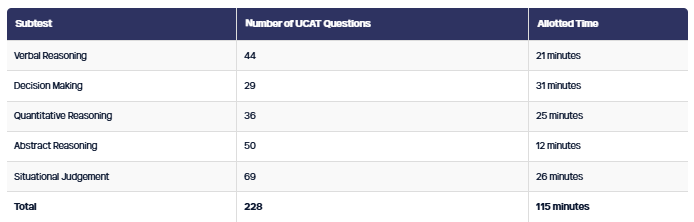
The UCAT ANZ is the University Clinical Aptitude Test. It is used in Australia, New Zealand and abroad for admission into a range of health science courses including medicine and dentistry. The UCAT is a 2-hour computer based psychometric test and is divided into separately timed sections:
- Verbal Reasoning
- Decision Making
- Quantitative Reasoning
- Abstract Reasoning
- Situational Judgement
What is UCAT Verbal Reasoning?
Verbal reasoning is the ability to comprehend, analyse, synthesise and drawing conclusions textual information. This is applying critical reasoning to written content.
- 36 Questions40 seconds per question
- 40 seconds per question
Example Question:
According to the passage, which of the following is true?
Australia found that obesity rates in Australia have more than doubled in the two decades preceding 2003. This rise in obesity has been attributed to poor eating habits in the country closely related to the availability of fast food since the 1970s, sedentary lifestyles, and a decrease in the proportion of the labour workforce.
There are many ways to classify obesity, and a traditionally used one is to assess one’s Body Mass Index (BMI). This is determined by dividing weight in kilograms by height in metres, squared. If someone is overweight their BMI will be 25 or more. If someone is obese their BMI will be 30 or more. Someone who has a BMI of under 18.5 will be underweight. However, more recently, studies have shown that a BMI alone is not a good indicator of obesity, as there are people who carry excessive weight, but their health is not compromised, so they are not considered obese. A better measure would be to combine one’s BMI and their Waist to Hip Ratio (WHR), together with consideration of their lifestyle.
Indigenous Australians have Australia's highest level of obesity. Professor Paul Zimmet at Monash University released figures at the Diabetes in Indigenous People Forum in Melbourne, estimating the rate of diabetes from poor diet at 24% of all Torres Strait Islanders, and remarked that unless extra steps are taken with these groups, Aboriginals and Torres Strait Islanders will die out within 100 years.
(A) Australia has the third-highest prevalence of overweight adults in the world.
(B) Out of the English-speaking countries, Australia has the third-highest prevalence of obesity.
(C) Obesity rates have more than doubled from 1983 to 2003 in Australia.
(D) All of the above
What is UCAT Quantitative Reasoning?
Quantitative reasoning is more than numbers and mental arithmetic. It is focused on sound reasoning which is grounded in numbers: statistics, figures, and costs. All candidates will have access to an onscreen calculator. This section is comprised of nine Scenarios with four questions each.
- 36 Questions
- 40 seconds per question
Example Question:
Using Goldman Exchange, how many pounds did she exchange if she ended up with $1000?
(A) 793
(B) 800
(C) 1015
(D) 1261
(E) 1280
What is UCAT Abstract Reasoning?
Abstract reasoning tests the ability to discern, analyse, and synthesise information. Students must be efficient in iterative thinking with the ability to constantly generate hypotheses and modify them dependent on their success.
- 55 Questions
- 14 seconds per question
What is UCAT Situational Judgement?
Situational judgement focuses on clinical scenarios that involve university and medical students. These scenarios evaluate a candidate’s integrity and ability to respond to difficult situations. Broadly, this section seeks to evaluate the emotional quotient (EQ) that is more applicable to future careers in health sciences.
- 69 Questions
- 25 seconds per question
Example Question:
James and Clair are both medical students. They are observing a colonoscopy, performed by a senior gastroenterologist, Dr Michaels. After the patient is put under anaesthesia, Dr Michaels instructs both students to perform a digital-rectal examination on the patient, as he believes that it would be a valuable learning experience.
How important to take into account are the following considerations for James and Clair, when deciding how to respond to the situation.
The students did not get a chance to obtain consent from the patient for the digital rectal exam, as the patient was under anaesthesia.
(A) Very important
(B) Important
(C) Of minor importance
(D) Not important at all
The patient was consented by Dr Michaels before the procedure, during which he explained to the patient that he might perform a digital-rectal exam to screen for certain diseases.
(A) Very important
(B) Important
(C) Of minor importance
(D) Not important at all
How is the UCAT scored?
The first thing to keep in mind is that the UCAT exam has no pass score. How well a candidate performs on the exam is expressed as a percentile which directly reflects how well said candidate has done relative to all others sitting the exam.
For example, a percentile score of 95 means that a student has scored better than 95% of students, and worse than 5% of students. This being said, universities technically do not decide on an arbitrary cut-off for the UCAT before student results and applications are in.
They execute a “top-down” approach, whereby they fill their medical school spots starting with the highest performers who preference said university first. The published cutoffs for each year are therefore retrospective and usually reflect the lowest UCAT score accepted that year.
How are UCAT scores calculated?
UCAT scores are calculated by converting the number of questions you got right into a ‘scaled score’. For more information about scaled score, check out our Exams and Interviews eBook. This ranges from 300 to 900 in each subtest. Your scores in each of the four cognitive subtests are added together to form an overall UCAT cognitive subtest score, which ranges from 1200 to 3600. Students also receive a separate score for UCAT Situational Judgement ranging from 300 to 900.
Raw scores in each of Abstract Reasoning, Decision Making, Quantitative Reasoning and Verbal Reasoning are converted to a Scaled Score between 300 - 900. This means a total score of between 1200 - 3600. Situational Judgement results are expressed in Bands with the highest being Band 1, and the lowest Band 4.
How are the UCAT scores used?
UCAT results are made available prior to most application deadlines. The consortium will advise applicants to use their results to guide their academic choices, to reduce the chance of a dead-end application. However, universities will advise applicants to use your UCAT results to determine eligibility.
What is a good UCAT score?
There is no clear indicator as to a ‘good’ UCAT score. However, we can assume that anything higher than one standard deviation above the mean can be considered a ‘good’ UCAT score.
When should I start preparing for the UCAT?
So, we know that the UCAT is competitive, as evidenced by the fact that your score is going to be a direct reflection of how well you shape up relative to the other 14,000 students sitting the exam at the same time as you. What do you do about this?
The answer is simple. Give yourself a competitive edge. Start your research now, acquire MedView preparation resources, secure a mentor, and plan. It’s no secret that most students will forget about the UCAT until a couple of months before they are due to sit it. They will purchase some last-minute question materials and cram for 3-4 hours per day in the lead-up time.
Meanwhile, their grades at school will slip, their anxiety levels will rise, and they will be stressed, leading to poorer sleep, and overall worse performance on the day. Don’t be this student. Understand that the fundamental pillar of preparation for any standardised exam is consistency, over a long period of time. This way, you develop skills, and the practice becomes part of your routine, and not something that disrupts it. This is analogous to the learning of a difficult piano piece over the course of a year.
Practising every second day in manageable segments is going to be far more effective than cramming in multiple hours of practice per day in the two months leading up to the piano recital. So the moral of the story here is: If you are at any point in your journey towards medical school, and know for sure that it is what you want to do, speak to an Academic Advisor and start your UCAT preparation with MedView now!
How often should I practice?
3, 4 or 5 hours of practice per day is not only impractical, but also suboptimal.
UCAT study should ideally be moulded around your school study, because more often than not, school exit scores or GPA will be the first thing that selection boards look at, before ordering candidates based on their UCAT score.
As such, the amount of time that each student dedicates towards preparation for the UCAT will vary. Furthermore, preparation should be goal driven. This means that you should be setting yourself performance goals (e.g. five abstract reasoning questions correct today) as opposed to time-based goals (20 minutes of abstract reasoning questions today).
What medical schools require the UCAT?
The below universities in Australia require students to sit the UCAT for undergraduate medical admission:
- University of Adelaide
- Curtin University
- Flinders University
- Monash University
- University of Newcastle / University of New England (Joint Medical Program)
- UNSW Sydney
- University of Queensland (provisional entry pathway)
- University of Tasmania
- University of Western Australia
- Western Sydney University
The two universities that offer medicine in New Zealand also require the UCAT:
- The University of Auckland
- University of Otago
If you want to go to medical school in Australia, you need to sit the UCAT in your final year of high school. Because you need to complete a one-year degree before medical school in New Zealand, you won’t need to sit the UCAT until you are at university.
Each university has its own UCAT cut-offs but like your high school scores, just meeting the UCAT cut offs isn’t enough. You’ll need to exceed the score expectations to have a chance of getting accepted in a medical school.
Who is eligible for the UCAT?
Students who are in their final year of high school and their first year of a health science degree at university. Students in lower year levels are not eligible.
When can I take the UCAT?
Candidates can book and sit the UCAT during the official testing period, which typically runs from early July to early August each year.
The UCAT can only be taken once per year, regardless of whether you are applying in Australia or New Zealand.
Where can I register?
Candidates must register via the Pearson VUE online system, where they create an account and book a test session.
Registration usually opens in March, with booking deadlines typically in May (dates vary slightly each year).
Is there a testing centre near me?
Candidates can choose to sit the UCAT in major metropolitan and regional sites. At major sites, candidates can choose any date from the 4-week period between the 1st and 31st of July. Other testing centres will only be open for a few dates in that period.
New Zealand
- Auckland: Open for all 4 weeks
- Dunedin: Open for 3 weeks
- Christchurch: Open for 2 weeks
- Wellington: Open for 1 week
Australia
- Major Metro (Open for all 4 weeks)
- Sydney
- Melbourne
- Brisbane
- Perth
- Adelaide
- Other Cities (Open for 2-4 weeks)
- Gold Coast
- Canberra
- Newcastle
- Hobart
- Geelong
- Regional Centre (Opens for 1 -2 weeks)
- Townsville
- Cairns
- Bendigo
- Ballarat
- Toowoomba
- Darwin
- Bunbury
- Further Regional (Open on selected dates)
- Mildura
- Wagga Wagga
- Alice Springs
- Port Augusta
The UCAT can also be sat overseas. Please contact the UCAT ANZ administrators, Pearson Vue, for more information.
How long do my UCAT results last?
Results are received on the day of the UCAT. Expect these results to hold currency for one year.
How much does it cost to sit the UCAT?
The UCAT fee is typically NZ$298 in New Zealand and A$325 in Australia.
Concession pricing may be available for eligible applicants (e.g. Health Care Card holders), depending on the year and eligibility criteria.
Will I need to take the UCAT to study undergraduate medicine?
With the exception of James Cook UniversMost undergraduate medical schools in Australia require the UCAT. Exceptions include:
- James Cook University (no UCAT)
- Bond University (no UCAT)
The University of Sydney does not offer standard undergraduate medicine, so UCAT is not required for its MD program.
Some provisional-entry and postgraduate pathways, as well as certain dentistry and health science programs, may also require the UCAT depending on the university.
Graduate Australian Medical Schools Admissions Test (GAMSAT)
What is the GAMSAT?
The GAMSAT is a standardised exam used for entry into graduate-entry medicine and some dentistry and health science programs in Australia, the UK, and Ireland.
The exam assesses a candidate’s ability to apply reasoning and problem-solving skills across humanities, written communication, and the biological and physical sciences. While it includes scientific concepts, the focus is on reasoning rather than memorisation, making it accessible to students from a range of academic backgrounds.
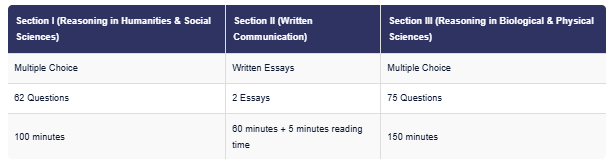
The GAMSAT runs for approximately 5.25 to 6 hours and is divided into three sections:
- Section One: Reasoning in the Humanities and Social Sciences
- Section Two: Written Communication
- Section Three: Reasoning in the Physical and Biological Sciences
How long is the GAMSAT exam?
The GAMSAT exam is six hours long with a one-hour break between Section Two and Section Three.
What does GAMSAT Section I test and how is it structured?
Section one includes a variety of graphs, poems, texts and proverbs which require you to understand concepts, interpret them in different ways and apply them to multiple questions.
A lot of students trip up on establishing the difference between what a text says, and what it means. Meaning any answer might be justifiably correct, but not always the most correct
Skills assessed: Comprehension, analysis, synthesising information and critical reasoning.
Duration: 110 minutes
Number of questions: 75 questions designed to assess your comprehension and synthesis of complex information over 110 minutes.
Example Question:
The following quotes relate to the concept of justice.
- "Observe good faith and justice toward all nations. Cultivate peace and harmony with all."
- "Injustice anywhere is a threat to justice everywhere."
- "I'm for truth, no matter who tells it. I'm for justice, no matter who it's for or against."
- "Justice cannot be for one side alone, but must be for both."
- "The dead cannot cry out for justice. It is a duty of the living to do so for them."
- "There is no crueller tyranny than that which is perpetuated under the shield of law and in the name of justice."
- "It is certain, in any case, that ignorance, allied with power, is the most ferocious enemy justice can have."
- "There is a higher court than courts of justice and that is the court of conscience. It supersedes all other courts."
Which of the following sets of quotes are most strongly related?
(A) 2 and 8
(B) 6 and 7
(C) 1 and 3
(D) 3 and 4
How does GAMSAT Section II work and what are examiners looking for?
Section two contains 2 prompt sets of essay questions. The first essay requires you to discuss themes of a socio-cultural nature while the second is more reflective, and will require you to think critically and deeply about your own understanding and application of the topic.
If it’s been a while since you finished high school, then this is the hardest section by far, since you have to complete two 500-word essays in an hour. But the speed at which you have to write isn’t the problem. 50% of the mark is what you write, but the other 50% is how you write it. This means you don’t just have to write quickly, you
Number of essays required: 2
Duration: 60 Minutes
Skills assessed: Essays, structure and content.
Example Question:
- Creativity is the defeat of habit by originality. (Arthur Koestler)
- Create like a god; command like a king; work like a slave. (Constantin Brancusi)
- Truth and reality in art do not arise until you no longer understand what you are doing. (Henri Matisse)
- You are lost the instant you know what the result will be. (Juan Gris)
- An essential aspect of creativity is not being afraid to fail. (Edwin Land)
What is included in GAMSAT Section III and how is the exam structured?
Section three is entirely multiple choice, made up of 40% biology, 40% chemistry and 20% physics questions. An understanding of scientific concepts prior to your exam is essential to be successful.
To get quicker and score higher at this section, the best thing to do is practice, practice, practice! This section is three hours, it’s brain draining and most people don’t finish so you need to make sure you know what to expect, and how to tackle any question that comes your way. MedView’ Question Bank is in my opinion the perfect resource to help you practice! With over 2500+ questions and 3 full length exams you can practice all types of biology, chemistry and physics questions both in your own time and under mock exam conditions.
Number of questions: 110
Duration: 180 minutes
Skills assessed: Scientific reasoning and knowledge.
Example Question:
Within the lung, there exists a mechanical interdependence between the chest wall and the lung surface. This mechanical interdependence is mediated by the pleura, a fluid-filled, sealed cavity between the muscles of inspiration and expiration, and the lung itself. The function of the pleura is to allow are mobility of the lung, whilst still forcing it to expand upon inspiration. The pleura is a sealed cavity, and the pressure of the pleural fluid is approximately 756mmHg. This is why we refer to human respiration as ‘negative-pressure breathing’ since the body aims to equilibrate the negative pressure of the lung in response to the pull of the pleura with the pressure of outside air (760mmHg). At rest, the inward elastic recoil of the lung is balanced by the outward elastic recoil of the chest wall, expressed as the transpulmonary pressure (TP) = Alveolar pressure (A) - Intrapleural pressure (IP). Thus, at rest, transpulmonary pressure usually exists at around 4mmHg. We generally assume alveoli have pressure consistent with external air, since the movement of air is free and rapid up and down the airway.
Often, patients presenting to the emergency department with chest wounds suffer from pneumothorax, in which the pleura has been compromised and is no longer a sealed, pressurised Space. The ventilation perfusion ratio (V/Q) is the ratio between how much air enters the alveoli (ventilation), and how much alveolar oxygen enters the blood (perfusion).
Upon inspiration, Which factor(s) in the equation TP = A-IP increase(s) relative to all others?
(A) Transpulmonary pressure
(B) Alveolar pressure
(C) Intrapleural pressure
(D) Transpulmonary and alveolar pressure
Who is eligible for the GAMSAT?
Students who are in their final or final-minus-one year of an undergraduate degree, or up to ten years after completion of their undergraduate degree.
Will I need the GAMSAT to study postgraduate medicine?
Yes, all postgraduate medicine programs require the GAMSAT.
When can I take the GAMSAT?
Candidates can sit the GAMSAT twice per year, typically in March and September.
For each admissions cycle, you can use results from multiple previous sittings (within the valid period).
How is the GAMSAT score calculated?
Upon completion of the GAMSAT exam you will receive a score for each section and an overall percentage score which ranks your score in comparison to all other students sitting the exam. Your GAMSAT score is valid for two years following the test date and you can sit the exam twice per admissions cycle (March and September).
It's impossible to predict your own GAMSAT Score from test material. The score is calculated from (1x your Section One results, 1x your Section Two results and 2x your Section Three results) /4. Your score is a percentile, relative to everyone else’s score, and is thus not something you can accurately calculate yourself.
Your GAMSAT score breakdown - the score for each section is what is most important in your GEMSAS application, as different universities put different weightings on each section. For example, most universities apart from the University of Melbourne, the University of Western Sydney, and the University of Queensland use the traditional weighting system, which weighs Section Three twice as much as Section One and Two.
Hot tip: To make sure you have a strong score against this weighting system, it is important to make sure you’re disproportionately strong in Section Three, or particularly poor in either Section One or Two
To complicate things further, each university accepts different ranges of GAMSAT scores. To make sure your preference list is favourable to your skills and GAMSAT abilities, MedView’s postgraduate entry application support program can help. Specifically designed by postgraduate medical students and admissions experts, this program will help you better succeed in your application.
Where can I register?
Registration is completed via Australian Council for Educational Research.
- March sitting: Registration opens ~November, closes early February
- September sitting: Registration opens ~May, closes early August
(Dates vary slightly each year)
What universities require the GAMSAT?
When applying for postgraduate entry medicine in Australia, there is one centralised online application portal - GEMSAS. The Graduate Entry Medical Schools Admission System. GEMSAS is run by the GAMSAT consortium, which comprises of 10 out the 13 postgraduate medical schools in Australia which include:
- Melbourne University
- Deakin University
- Australian National University
- Wollongong University
- University of Notre Dame
- Macquarie University
- Griffith University
- Queensland University
- University of Western Australia
The three universities that aren’t apart of GEMSAS include:
- Sydney University
- Flinders
- Monash
Note: Sydney and Flinders require the GAMSAT exam and direct application and Monash requires students to have completed their undergraduate degree at Monash.
This system allows you to choose from three to six medical schools, then uses calculations to allocate an interview and medical school offer based on your eligibility and highest preferred postgraduate medical school. You are offered a maximum of one interview. Your application to GEMSAS is a single online application form, a preference list of up medical schools, as well as your undergraduate degree transcript.
What is GEMSAS?
GEMSAS is the Graduate Education Medical Schools Admissions Systems consortium responsible for GAMSAT admissions which includes a combination of almost all universities - excluding Flinders, Bond, Monash and Sydney
If you apply through GEMSAS you list your 6 preferred universities and you will be offered a maximum of one interview, which is an interview at your highest preference university that you are eligible for.
Where can I sit the GAMSAT?
Candidates can choose to sit the GAMSAT in major metropolitan and regional sites.
Australia
- Canberra
- Sydney
- Darwin
- Brisbane
- Townsville
- Adelaide
- Melbourne
- Perth
- Hobart
Ireland
- Cork
- Dublin
- Limerick
United Kingdom
- Liverpool
- London
Singapore
United States
- Washington DC
New Zealand
- Wellington - Only available for March
How long do my GAMSAT results last?
Results are received mid-May for the March GAMSAT and November for the September GAMSAT. The results hold currency for one year.GAMSAT results are valid for 2 years for most universities (including Australia and the UK).
When should I choose to sit the GAMSAT?
Students typically sit the GAMSAT when they are:
- In their penultimate or final year, or
- Have completed their degree
Strategy matters:
- March sitting: aligns better with application timelines
- September sitting: useful as a backup or early attempt
Most Australian applications (e.g. via GEMSAS) accept results from the previous 2 years.
How is my GPA calculated for postgraduate admissions?
Another element of admission into postgraduate medical school is the GPA hurdle. Your GPA is your Grade Point Average, which is the weighted mean of all your grades achieved in the final 3 years equivalent of full-time undergraduate study.
Firstly, a lot of people believe that you can only apply to postgraduate medicine if you have completed a medical related degree - e.g., Nursing, Biomedical Science etc. However, this is not correct, yes there are discrepancies between universities in terms of GPA cut offs, but there is no advantage or disadvantage to the degree achieved, or the university in which your degree was achieved.
However, your degree must have been completed in the last 10 years, unless postgraduate study has commenced. It is at the discretion of the university as to whether your postgraduate study is considered in the calculation of your GPA but most of the time, it is your last three years that are considered.
It would be correct to assume Honours years also add a level of complexity to your application. The University of Melbourne and the University of Western Australia require your Honours to be completed by mid-year of your application cycle for it to be considered in your GPA calculation. The University of Melbourne, Deakin University and Macquarie University will also only consider specific Honours subjects, not your overall Honours grade and this information will not be released to you prior to your postgraduate entry application.
To determine your GPA weighted grade the following calculation is used:
- Most Recent GPA = Weighted x3
- Most Recent -1 GPA = Weighted x2
- Most Recent -2 GPA = Weighted x1
Your average GPA is calculated by dividing the result by 6. GEMSAS places a higher emphasis on the latter years of study which is reflected in their calculations, as they assume the level of intelligence is higher the longer you study.
However, several universities calculate the GPA differently. The University of Western Australia weighs every year the same and does not require a competitive GPA just a threshold over 5.0. UWA, also used a system called FTE which fairly evaluates all students. This means a minimum of two subjects/courses are required to be taken in the final semester/in your application semester in order to achieve a 25% FTE and be considered for a place.
What do I bring on exam day?
On exam day make sure you have a huge breakfast because you have a big day ahead. Also pack lunch, because it takes the stress away of having to find a cafe on the day. You will be required to report to your selected test centre by 8.15am but make sure to check your admission ticket beforehand to make sure.
You will need to also bring photo identification. This can include a passport, drivers licence.
You will be sitting the exam for a total of 5.5 hours, 25 minutes of reading time and 1 hour for lunch between section two and three.
How is the GAMSAT different to the UCAT?
The GAMSAT and UCAT assess different skills:
- GAMSAT:
- Focuses on reasoning across humanities, writing, and science
- Requires some scientific knowledge and essay writing
- UCAT:
- Focuses on aptitude and cognitive skills
- No assumed prior science knowledge
GAMSAT is not purely knowledge-based, but it does require content familiarity + reasoning
The BioMedical Admissions Test (BMAT)
What is the BMAT?
The BMAT is an aptitude test used as part of the medical school admissions process in the United Kingdom, Singapore, Spain, Malaysia, Thailand, Hungary, Croatia and the Netherlands
What does BMAT Section 1 (Thinking Skills) test and how is it structured?
Section one of the BMAT tests your problem-solving skills, ability to understand arguments and data analysis and inference. You will answer 32 multiple choice questions in 60 minutes
What does BMAT Section 2 (Scientific Knowledge and Application) assess and how is it structured?
Section two of the BMAT assess one's ability to apply scientific knowledge. Typically covering university level Science and Mathematics. You will answer 27 multiple choice questions in 30 minutes.
What is required in BMAT Section 3 (Writing Task) and how is it assessed?
Section three of the BMAT assess your ability to select, organise and develop ideas and communicate them in writing, concisely and effectively. You will have one writing task with a choice of three questions in 30 minutes.
What are the key differences between the UCAT and the BMAT?
Although both the UCAT and BMAT assess how you think, they differ significantly in structure and the skills they test.
The UCAT is divided into five sections: quantitative reasoning, verbal reasoning, abstract reasoning, decision making, and situational judgement. Each section focuses on problem-solving, logic, and decision-making skills.
In contrast, the BMAT is made up of three sections. Section 1 tests critical thinking, numerical reasoning, spatial awareness, and problem-solving. However, the key difference lies in Sections 2 and 3, which have no equivalent in the UCAT. Section 2 assesses scientific knowledge (to GCSE standard), while Section 3 requires candidates to write an essay, evaluating their ability to structure and communicate an argument clearly.
These additional components make the BMAT a broader assessment, requiring both academic knowledge and written communication skills—important factors to consider when choosing which exam to take.
Another key difference is exam timing. The UCAT offers multiple testing dates between July and October, giving students flexibility. In contrast, the BMAT is typically sat only once, either in August or October. Notably, the University of Oxford only accepts BMAT scores from the October sitting, meaning applicants must plan accordingly.
Multiple Mini Interview (MMI) & Medical Interview
What is the MMI (Multiple Mini Interview)?
The medical interview is your last step towards achieving your goal of becoming a doctor. During the MMI, each student spends between eight to ten minutes at each station, of which there are eight. Students have two minutes of reading time per station, with the remaining six to eight allocated as interview time.
While the interviewers are judging you from a holistic perspective, there are some key skills and characteristics they are looking for, including:
- Communication
- Quality of argument
- Critical thinking
- Creativity
- Social responsibility
- Cultural safety
- Awareness of health issues
- Moral reasoning
- Self-awareness
- Empathy
- Conflict resolution
- Career choice
- Teamwork
- Self-care
Each mini-interview will assess you on two to three of these qualities.
The most difficult part about the MMI is not just answering the questions - although that’s hard too - it’s about making your answer stand out. You have to have your own personal reason that you know the interviewer will resonate with and remember. Try doing that for 8 stations in a row!
Which universities use the MMI?
Section one of the BMAT The Multiple Mini Interview (MMI) is used by the following Australian and New Zealand medical schools
- Australian National University
- Bond University
- Deakin University
- Griffith University
- Monash University
- The University of Auckland
- The University of Melbourne
- The University of Notre Dame
- The University of Sydney
- The University of Wollongong
Who is eligible for the MMI?
Students are eligible and will be invited for an interview based their scores from either the UCAT or GAMSAT exams.
What happens during the MMI?
During the MMI, an applicant moves from station to station in timed intervals. Each station will be a separate interview to assess a different soft skill. Prior to each interview, students will be given a prompt, normally in text or video format. In the short breaks between each station, you are given evaluate the next prompt. These prompts can be interpreted differently and are often intentionally vague to assess how you navigate ambiguous situations.
MMIs will typically be delivered face to face. Some interviewing stations do allow for video conferencing.
Who uses the MMI Interview?
The following universities are advocates for the MMI:
- University of Sydney
- University of Wollongong
- Australian National University
- University of Melbourne
- Monash University
- Deakin University
- Griffith University
- University of Notre Dame
- Bond University
- University of Auckland (NZ)
There are a few universities that use a different style of interviewing to assess applicants:
- UNSW: Semi-structured interview
- Flinders University: Semi-structured interview
- James Cook University: Semi-structured interview
- University of Adelaide: A mix between the MMI and semi-structured interviews
- The University of Newcastle: Multiple Skills Assessment
- University of Sydney (Double-Degree Medicine): Unstructured interview
The following universities that don’t require an interview for admission into medicine:
- University of Queensland
- Griffith University
- Charles Darwin University
- University of Tasmania
- University of Otago
How can you build a strong personal profile for medical interviews?
From now until your interview, you will need to build your personal profile. Your personal profile is the essence of who you are, it is your ‘self-knowledge’.
It should consist of:
- The experiences that have moulded you into who you are now
- Goals you have set yourself
- Things that motivate you
- Role models and people you admire
- Your strengths and weaknesses
- Opinions, views, concerns, feelings
- Your personality, character and attitude to life
- Learning by reflection
This will be the hardest and most complex task you will undertake, but it is certainly the most rewarding. This is not an activity of changing oneself, or fabricating your character to make you into the perfect medical candidate but rather learning about who you really are. During the interview you will be asked questions relating to your personal profile. It is very hard to answer effectively if you have not thought about it beforehand!
How do you answer “Why do you want to be a doctor?”
Students in school or undergraduate university who are gunning for a medical school spot spend so much of their time focused on getting the grades for standardised tests and maximising their GPA, that sometimes they can lose track of what is driving them to study medicine in the first place. Medical school and the career that follows is a massive commitment, and interview panel members want to be sure that they are selecting candidates who know this, and can demonstrate true insight into why they want to be a doctor and hence are deserving of a spot in their program.
As a student taking either the Multiple Mini Interview (MMI) or Semi-Structured Interview (SSI), some variation of the question: “why do you want to be a doctor?” is bound to be asked at some point. Have a good answer to this question that goes beyond the old and tired responses usually provided by aspiring medical students:
- “...because I want to help people”
- “...because I like science”
So, what kind of responses are they looking for? The answer to this question is simple: Something that makes you unique, original and MEMORABLE! Tell a story of your personal struggles related to health, or do some research into the latest health inequalities and why some of those in particular strike a chord within you. Sources of inspiration that can help you to flesh out the reasons behind why you have chosen this path are everywhere. From medical TV shows, to Instagram accounts of famous doctors, books, blogs, etc. The world of information is your oyster, so use it to develop a well-thought-out response to the bread and butter of medical interview questions.
How is the MMI evaluated?
During each station, after your interview the interviewer will assess your performance based on the Likert scale from 1-10, where 1 is “Unsuitable for the profession”, and 10 is “Outstanding”. You will not receive any feedback from an interviewer at any time throughout the interview.
These interviewers are not evaluating your pre-existing medical or clinical knowledge, but rather how you communicate, navigate difficult situations, process information, and overall suitability for a position in the medical field.
How is your motivation to study medicine assessed in the MMI?
What is it that draws you to this profession? What need does it fulfil? What do you want to achieve in the medical field? These types of questions will assess your desire to become a doctor and your views toward the medical field.
Example Question:
You are currently a student completing your final VCE exams. You’re not quite sure whether you want to go to university as you aspire to be a concert pianist – your parents however, have different plans for your future. In spite of your career aspirations, your parents want you to study medicine.
- How would you go about telling your parents that you don’t want to do medicine?
- Do you think it is right to do medicine because your parents want you to?
- What do you think are the right reasons for wanting to do medicine?
- What are the potential repercussions of pursuing a career that you do not want to do?
- What will you choose to do – pursue your career or please your parents? Why?
How is your leadership assessed?
Leadership and teamwork are crucial elements of practice in the medical profession. As a doctor, you’ll play a key leadership role that involves problem solving, decision making, and coordinating the efforts of others.
Example Question:
In 2007, the American Family Physician Journal published an article exploring the issue of physicians as role models, using a scenario in which an obese physician is offering nutrition and exercise counselling to his obese patient.
According to the author’s research, patients have more confidence in health-counselling advice from non-obese versus obese physicians, and physicians with poor personal lifestyle habits are less likely to counsel patients about a healthy lifestyle. Based on these research findings do physicians have a responsibility to act as healthy role models to their patients? Please elaborate.
- Is a physician who does not follow a healthy lifestyle employing a double standard when they are providing lifestyle-counselling? Explain.
- Do you think there is a difference between unhealthy lifestyle habits that manifest themselves more visibly than others (e.g. obesity versus smoking)? Explain.
- What determines whether or not another person is a role model? Who decides and why?
- What are the limits to this responsibility?
- Do you have any additional comments before we end this discussion?
How is your moral and ethical reasoning assessed in real-life scenarios?
It’s inevitable that you’ll face some moral grey areas as a doctor. A key skill is the ability to form a strong opinion before making a measured decision – and most universities will have a station or two to test how you would solve these issues.
Example Question:
You are the head of a committee involved in issuing a donation of $50,000 to a charitable organisation every year. The committee has short-listen three organisations this year, but is having trouble selecting which one will receive the donation. You must decide which charity receives the money, between the following charities:
- St. Vincent de Paul Society: an organisation committed to speaking out against the causes of poverty and inequality on behalf of demographics such as refugees and low-income citizens.
- Possible Dreams International: an organisation which partners with rural and remote communities in Eswatini (Swaziland) to empower families and individuals living with extreme poverty, malnutrition and endemic disease.
- Red Dust: an organisation that delivers health promotion programs and community development projects to indigenous communities in rural Australia.
You will be expected to choose an organisation and justify why you selected them.
- Which organisation would you pick and why?
- If you could split the money, how would you do so?
- Do you believe that volunteering work should be compulsory for high school children?
- What are the ethical issues that may arise by making volunteering work compulsory?
- Have you done any volunteering work? If so, where?
How are your problem-solving and conflict resolution skills tested?
You are not a doctor yet, so the solutions to these types of questions won't have a clear answer. Questions like these will be used to assess how your mind works and how you reach solutions.
Example Question:
You are a receptionist in a medical centre. You have found out that a patient, Henry, is HIV positive. He is engaged to the Sandra, the daughter of your good friend, who as far as you are aware of does not know this.
- What are you going to do?
- Henry became HIV positive after a syringe attack when he worked in a petrol station. Would that change your view?
- Sandra’s mother found out about this, and she was furious that you did not tell her that Henry is HIV positive. What do you do?
- Should people with infectious diseases such as HIV be allowed to practise medicine?
- Currently in Australia there is mandatory reporting of new HIV diagnoses to the Government, do you think this is ethical?
How is your cultural awareness and empathy assessed in patient scenarios?
Being culturally sensitive is of utmost importance to doctors. These stations test your understanding of the significance of ethnicity in a health context.
Example Question:
You are a teacher in a rural primary school that is largely composed of indigenous children. There is a state funded program that provides $5000 per month to provide breakfast for the children as many are from disadvantaged background could not afford to be fed in the morning, and there had been a visible improvement in children’s performance now that they are guaranteed to have food in the morning. The president of the school board however, wants to scrap this program, and use the money to buy more books for the school library that had not been updated for two years now. He has stated that, “with a new library it will benefit all children, not just the black ones.”
- What would you say to the president of the board?
- What would happen if the breakfast program was scrapped?
- What would you do if the breakfast program was scrapped?
- What are the alternatives?
- A mother had complained that her son’s reading was not up to standard, and stated that she would rather see the money goes to more books. What would be your reply to that?
What Australian, New Zealand, and global health issues should you understand?
This interview station is set aside to test your knowledge your knowledge of health policy and medical news and trends in ANZ and the world.
Example Question:
There has been recent debate regarding the benefits of feeding infants with baby formula as opposed to breast milk as well as the accessibility of baby formula in rural towns. In response, the concept of a breast milk bank has been put forth as a solution – such a bank would receive breast milk donations from women and distributes it to mothers who encounter difficulties with lactation.
- What are the benefits of breast milk over baby formula, particularly for those in rural towns?
- Are there any ethical issues that may arise following the introduction of breast milk banks?
- What else can be done to assist mothers who have difficulty lactating?
- What are issues that may be encountered by new mothers living rurally?
- What can be done to combat the lack of accessibility to healthcare in rural areas?
How should you research the health sector for medical interviews?
Having background knowledge of the health sector can be very helpful. It will help you to portray a greater level of insight in many of your answers and show the examiners that you understand where medicine fits in society. Doctors are not the only members of the health care team or even the most important. You need to have knowledge of the entire health sector from prevention to rehabilitation and the unique contributions of other member of the health care team.
The following are some of the main areas of focus:
Public Health Care
Public hospitals are set up to provide free acute and elective health care to ensure that as many people as possible have access to essential health care services. Public health care is also about early intervention to prevent disease and morbidity. This is not only cost effective, it is better for the patient because doctors often cannot restore the patient to their previous state of health.
Private Health Care
Many people have private health insurance because it allows them to bypass the waiting times in the public health system for treatment of non-urgent conditions and allows the patient to choose their treating doctor. However, this can be expensive depending on the level of care received. People who have private health insurance are not excluded from public health services.
Primary Health Care
This relates to health care received in the community, usually from a GP or practice nurse. It includes a range of services, including health education, counselling, disease prevention and screening. Primary health care is essential for improving the health of all residents and reducing health inequalities.
Secondary, Tertiary and Quaternary Health Care
Refers to more specialised medical care; more expensive and less accessible than primary health care. Secondary care is a service provided by medical specialists after patients have been referred by their primary care provider (usually a GP). It is generally delivered in a hospital or clinical setting. Tertiary care is more specialised, including particularly complex medical or surgical procedures. Quaternary care is considered to be an extension of tertiary care, and would include experimental medicine and procedures, and uncommon specialised surgeries.
Pharmaceutical Costs
Medication costs play a significant part of any country’s health care budget, for New Zealand and Australia there are government organisations which regulate this. A country like America, which has an open market for pharmaceutical products, have a far greater range of products but prices are often more expensive.
Pharmac
The Pharmaceutical Management Agency of New Zealand’s central role is to manage the pharmaceutical budget on behalf of DHBs (District Health Boards), and to decide which medicines are funded by the government. The list of funded medicines is published in the Pharmaceutical Schedule.
The Pharmaceutical Benefits Scheme (PBS)
PBS is a program of the Australian government that provides subsidised prescription medications to residents of Australia, as well as certain foreign visitors. The PBS aims to ensure that Australian residents have affordable and reliable access to a wide range of necessary medicines.
How can you stand out to medical schools during the MMI interview?
When factoring in tuition, resources, medical education technology and registration fees, it costs the Government around $1 million in tax-payer money to bring a person through medical school until they are a doctor at a public university. As such, something I always tell my tutoring students is that medical schools are looking at each student as a possible investment opportunity. In other words, is this student worth this investment for this particular university? So how do you show the panel members that you are this student?
Do your research into the specific university, the details of the course profile of the MD or MBBS offered, and float some ideas about which specific elements of the program offered at this university appeal to your career aspirations and goals the most.
Students who are clearly invested in the specific medical school at which they are interviewing and have evidently taken the time to learn the ins and outs of the course profile pre-emptively, are more likely to be viewed as a good investment.
What are the best MMI preparation strategies?
There are three strategies that will set you up for success in the MMI:
- Using cue cards
- Expanding your vocabulary
- Building your confidence
Cue Card System:
The best way to prepare for the MMI is by answering practice questions.
However, it is important that you don’t memorise word for word your answers to questions. The interviewers do not want to hear recited, clichéd responses – and you will probably struggle to make any prepared responses “fit”.
The best way to use practice questions is with cue cards.
For every question you come across, think of two or three key points that you want to talk about. For each of these main points, have some topics and examples ready to explain or support that point.
Example question:
What problems do you foresee being a doctor?
A couple of prompts you could write on your cue cards include:
- Work/life balance: Managing patient demands, family demands, and social demands
- Stress: Taking on patients’ problems, long hours/being on call, ongoing professional development
Then, practise elaborating on these points in timed conditions until you feel comfortable with your delivery. By not writing your answers out word for word, you won’t come across as too rehearsed.
Expand your vocabulary
A broad vocabulary will add weight to your answers and ensure you sound impressive.
Write down a list of words and practise using them daily. Include positive action words as well as some basic medical lingo.
Some “buzzwords” that will score you points in your interviews include:
- Disparities
- Socioeconomic
- Ethnicities
- Therapy
- Asymptomatic
- Diagnosis
- Acute
- Chronic
- Anatomy
- Symptoms
- Prognosis
- Aetiology
- Reaction
- Adverse
- Baseline
- Multidisciplinary
- Precaution
You also want to practise using some “action” words, such as:
- Instituted
- Implemented
- Coordinated
- Developed
- Consolidated
- Founded
- Instructed
- Researched
- Scheduled
- Reorganised
- Recommended
- Accomplished
Confidence building:
The best way to build confidence in any area is to practise, practise, practise!
If you’re subject to a bit of stage fright, you will need to work on building skills in this area. The last thing you want is nerves ruining all your hard work.
The good news is that confidence is developed, not inherited! But you will need to put some time into it.
To prepare yourself for the MMI, practice under timed conditions so there are no surprises on interview day. You can read our top tips and tricks and even practice in MMI conditions, check out our MMI prep offerings for the most up to date information.
Make sure you practise with friends and family, too, as they will offer you honest feedback and (hopefully!) encouragement. Bonus points if you do it under timed MMI-style conditions!
How can you present yourself well in a medical interview?
It’s no secret that how you look on the day is important. Make sure your shirt is ironed, your hair tied up, your face cleanly shaven and your shoes new if not immaculately polished.
Even in a post-COVID world where hand-shaking may be a thing of the past, it is still possible to make a strong first impression with a smile upon entrance into the room. It is also important to remember that examiners understand that this may be the most stressful moment of your life to date, so being calm and collected enough to start any interaction with a pleasant “hello nice to meet you” is a simple but effective way to demonstrate that you are composed and deal well with stressful situations.
University Selection & Application Support
What are the key details (fees, entry requirements, rankings, and cohort size) for the University of Sydney medicine?
Cost:
- Local student: $10,596.00 AUD
- International student: $74,000 AUD
Entry requirements:
- Undergraduate double degree: Competent in English, 99.95 ATAR (or equivalent)
- Postgraduate: Academic rank, GASMAT score and interview mark
QS World University Rankings:
- Overall: 50
- Dentistry: 41
- Medicine: 15
Student enrolment:
- Total: 29,461
- International students: 8,568
What are the key details (fees, entry requirements, rankings, and cohort size) for the University of New South Wales medicine?
Cost:
- Local student: $63,576 AUD
- International student: $254,880 AUD
Entry requirements:
- Undergraduate: Academic rank, UCAT score and interview mark
- Postgraduate: Academic rank, GAMSAT score and interview mark
QS World University Rankings:
- Overall: 45
- Medicine: 50
Student enrolment:
- Total: 39,784
- International students: 14,292
What are the key details (fees, entry requirements, rankings, and cohort size) for University of Melbourne medicine?
Cost:
- Local student: $65,568 AUD
- International student: $77,824 AUD
Entry requirements:
- Undergraduate: 95+ ATAR (or equivalent)
- Postgraduate: Academic rank, GAMSAT score and interview mark
QS World University Rankings:
- Overall: 41
- Dentistry: 28
- Medicine: 19
Student enrolment:
- Total: 42,182
- International students: 18,030
What are the key details (fees, entry requirements, rankings, and cohort size) for the Monash University medicine?
Cost:
- Local student: $9800 AUD
- International student: $38,500 AUD
Entry requirements:
- Undergraduate: UCAT, 94 ATAR (or equivalent), interview mark, school subject prerequisites (maths, english, science)
- Postgraduate: Academic rank, GAMSAT score and interview mark
QS World University Rankings:
- Overall: 60
- Life sciences and medicine: 28
- Medicine: 29
Student enrolment:
- Total: 57,433
- International students: 20,578
What are the key details (fees, entry requirements, rankings, and cohort size) for the University of Queensland medicine?
Cost:
- Local student:
- Undergraduate: $8,712 AUD
- Postgraduate: $10,596 AUD
- International student:
- Undergraduate: $32,112 AUD
- Postgraduate: $69,120 AUD
- Undergraduate: Queensland Year 12 English (or equivalent), high school OP 1 or 99 Entry Rank 99 (or equivalent) and a competitive overall UCAT score.
- Postgraduate: A previous degree or qualification with a minimum GPA, relevant professional experience, compliance with special entry requirements, GAMSAT score.
Entry requirements:
QS World University Rankings:
- Overall: 47
- Life sciences and medicine: 32
- Medicine: 42
Student enrolment:
- Total: 37,497
- International students: 10,420
What are the key details (fees, entry requirements, rankings, and cohort size) for the University of Auckland medicine?
Cost:
- Local student: $15,082.80 NZD
- International student: $72,896 NZD
Entry requirements:
- Undergraduate: UCAT score (15%), first year subjects GPA (60%), MMI (25%), competent in English (prerequisite)
QS World University Rankings:
- Overall: 82
- Life sciences and medicine: 62
- Medicine: 51 - 100
Student enrolment:
- Total: 29,461
- International students: 8,568
What are the key details (fees, entry requirements, rankings, and cohort size) for the University of Otago medicine?
Cost:
- Local student: $15,087 NZD
- International student: $32,025-$83,200 NZD
Entry requirements:
- Undergraduate: UCAT, HSFY papers
- Postgraduate: UCAT, Bachelor's degree (or higher)
QS World University Rankings:
- Overall: 151
- Dentistry: 29
- Medicine: 51 - 100
Student enrolment:
- Total: 18, 532I
- International students: 3,871
What is the difference between Otago and Auckland for medicine?
Application:
There are a few key differences in the application process for Auckland and Otago, the biggest one being -- the interview. University of Otago is pretty straightforward, your admission is based solely on your GPA as long as you reach a threshold score for your UCAT. If you know you’ve been hitting the books like mad, or perhaps the word interview sets your teeth on edge. Then it’s possible that Otago is the place for you!
The MMI or the Multiple Mini Interview is only required for application to the University of Auckland. If you love a good yarn, or maybe you feel that your grades/UCAT left a little to be desired, then the MMI is a great place to show your stuff. But be forewarned, the MMI is not like any other interview out there - and you’ll need to prepare strategically if you want to blow the competition out of the water
Lifestyle:
Otago has much to offer in the way of lifestyle. They are world renowned for their halls of residence - it’s almost like you’re living in Hogwarts! The halls offer a sense of community, and have options for every individual interest. Additionally, Dunedin is very walkable, so if you like to sleep until the very last second before class, you might be able to! Otago is the place to be if you want to be close to world class ski fields and tramping terrains.
Auckland is another amazing place to be for medical school. The Grafton campus where you will sit your preclinical years is across the road from New Zealand’s largest hospital - Auckland City Hospital. This also means that some of New Zealand’s best clinicians walk across the street to lecture to the Auckland medical students. Another important consideration worth mentioning is where your parents live - you have the potential to save $$, have home cooked meals and folded laundry - even the most luxurious campus housing can’t offer you that!
Medical School Experience:
Most of the medical school experience is similar for both University of Auckland and University of Otago - you have three preclinical years. This includes the first year, which can be just as rough as everyone says, but you have to learn how to work strategically, and know when to seek help. The next two years of medical school involve a deep immersion into the medical sciences. After your preclinical years you have - you guessed it - the clinical years! This means you’ll be in the hospital doing hands on learning!
One big difference between Auckland and Otago’s medical programmes is how the clinical years are structured. At the University of Otago, you have the option of being placed for your clinical years in Dunedin, Wellington or Christchurch. Wherever you choose, you will be placed for the entire three years of your clinical years. At University of Auckland, you have many options to choose from for your clinical years, Auckland, Whangarei, Rotorua, Tauranga, Taranaki and Hamilton. But you will choose a different location every year of your clinical years. So, if you’re a serious homebody, Otago might be the place for you. If you want to live all over New Zealand, check out Auckland!
How much does medical school cost in Australia and what financial support is available?
Australian Expenses and Financial Aid:
Australian universities are a bit more complicated because every university has three different tuition prices.
- Commonwealth Supported Place (CSP) price: Eligible Australian citizens only as of 2018
- Domestic price: All other Australian citizens
- International price: The rest of the world, including New Zealand
CSP are government subsidies that do not need to be paid back. With CSP, the government covers part of your tuition and you are expected to pay the rest through your “student contribution amount”. The amount you’ll need to contribute is based on your course.
As a medical student, your student contribution amount is $10,596 AUD a year.
If you aren’t eligible for a CSP, you’ll pay the domestic price which is closer to the international price.
For example, studying medicine at Western Sydney University would cost a CSP $10,596 AUD a year, a domestic student $42,320 AUD a year, and an international student $60,760 AUD a year.
Once again, you’ll also need to factor in your cost of living, which can vary dramatically throughout Australia.
You need between $9,372 and $48,436 AUD depending on your location and lifestyle.
There are three different government loan options for Australian citizens:
- FEE-HELP: Only for tuition fees with a maximum lifetime limit of $124,238 AUD
- HECS-HELP: Only for CSP students with no limit
- SA-HELP: Only for student services and amenities fee limited to around $294 AUD a year
Once your income is above $54,126 AUD a year, you’ll need to start paying your loans back.
As an international student, your options are limited to a few competitive school scholarships.
How much does medical school cost in New Zealand and what financial support is available?
New Zealand Expenses and Financial Aid
The average medical tuition in New Zealand, for New Zealand or Australian citizens, or residents of New Zealand, is about $15,249 NZD a year.
As an international student, you’re looking at between $32,376 and $78,907 NZD a year, depending on your course.
You will also need to factor in your living costs. Depending on the city you go to school in and your lifestyle, you will need between $15,182 and $25,969 NZD a year for living costs (excluding your tuition).
Altogether you’re looking at around $30,431 - $40,945 NZD per year if you're a local student and around $47,558-$104,876 NZD a year if you're an international student.
If you’re a New Zealand or Australia citizen, or a resident of New Zealand, you are eligible for student loans. There are government student loans that cover your tuition fees and living costs. However, you’ll need to pay these loans back once start making more than $19,136 NZD (pre-tax). You may also be eligible for a weekly allowance that you don’t need to pay back.
As an international student, however, you're not eligible for student loans. Luckily, there are quite a few scholarships available for you and you may be able to work 20 hours a week on your student visa.
What is a postgraduate medical portfolio and how is it used in admissions?
The portfolio is only applicable to two universities, but plays an essential part in their consideration process. The University of Notre Dame and the University of Wollongong’s consider your portfolio alongside your GPA and GAMSAT score, although the weighting of the portfolio is unknown.
Hot tip: Adding an extra dimension into the application means there is less overall emphasis on your GPA and GAMSAT score.
The University of Notre Dame is a catholic institution, meaning the university puts an emphasis on education within the context of catholic values. They welcome students of all religious backgrounds, as long as the student has an understanding for the values of ethical and service-based values, such as compassion, respect and social justice. If successful, all students must complete a Bioethics paper.
The University of Wollongong on the other hand, has a strong focus around rural, regional and remote medicine, preparing doctors for a range of settings across Australia and internationally. They chose students who have diverse backgrounds and are comfortable with living in rural settings or have ties to rural communities and schooling.
What is required in postgraduate medical personal statements and how are applicants assessed?
The University of Notre Dame also requires a personal statement - along with your GPA, GAMSAT and portfolio - where you must outline your reasons for pursuing medicine, as well as why Notre Dame is the best choice for you. It is important to create an application that represents your character while also demonstrating the asking values.
The University of Wollongong requires a video which is similar to a UCAT situational judgement question, used to determine personal and professional traits that are suited for a career in medicine. These include empathy, communication, ethics and problem solving.
Deakin University prefers students who have a background in healthcare or a history of study at Deakin University, residing in the Geelong area or are financially disadvantaged.
Australian National University prefers students who have completed Honours, Masters or PhD study.
Griffith will award an instant 7.0 GPA to anyone with a PhD and a maximum GPA for each year of full time Masters course by research.
About MedView
Why choose MedView?
There are many reasons to choose MedView. Unlike our competitors, MedView offers flexibility, learning at your own pace, and top-scoring tutors, anywhere you are.
All our services are delivered online, at a time that suits you, reducing restrictions so you can still enjoy life.
MedView’s programs are personalised so you can learn at your own pace and you only pay for what you need and nothing else.
Who is MedView for and are there any age restrictions or limitations?
The intended age range for MedView is 14 - 18, however, we can help students outside this age group with our close partnership with Crimson Education group and their additional services.
How do I get started with MedView?
Book a FREE consultation with an Academic Advisor.
How much does MedView cost?
MedView’s pricing is flexible and dependent on your needs as a student. Our highly individualised approach to medical schools admissions support is built around a desire to help each student based on their strengths, weaknesses, financial situation, age, goals and aspirations. Our Academic Advisors provide free one-hour consultations with families to help build these personalised programs which then leads to a determination of cost.
What if I'm interested in multiple pathways?
If you’re interested in multiple pathways to medical school, don’t stress. During your consultation, they’ll make time to discuss all your areas of interest and create a plan best suited to your needs
Is MedView a safe and inclusive environment?
MedView ensures all students and families are provided with a safe learning environment and community.
Does MedView offer any face-to-face consulting?
Yes, we offer consultations with our academic advisors both face to face in one of our offices or online. The process of booking your consultation is the same, and you will need to contact us to request your free consultation and book yourself a time.
What happens after my consultation?
After your initial consultation with one of our Academic Advisors, we will build a highly personalised plan based on your age, current situation and admission goals.
Next you'll be introduced to your Admission Specialist who'll help organise your entire MedView journey, coordinate your tutor and mentor scheduling, assist you with actioning all steps recommended by your MedView team, and act as a regular communication base for you and your parents or guardians.
MedView's unique algorithm matches students to their team based on their academic goals, passions and learning styles. Your team will include tutors, admissions experts, current medical students and doctors from Australasia's top medical schools.
Is MedView an accredited member of IACAC and NACAC?
MedView is a member of both the International Association for College Admission Counseling (IACAC) and National Association for College Admission Counseling (NACAC) and follows their high standard in college admissions and ethical responsibility.
You don’t have an office in my home town or city. Can you still help?
Of course we can! With our innovative use of online technologies and flexible global teams we are able to help you wherever you are. We have a growing list of locations in 20 different countries, but each one acts as a regional centre to serve students in nearby cities and territories. If you are unsure which office to contact, don’t hesitate to fill in a contact form on our website or call the closest office to you and ask for help.
Join the MedView student success family